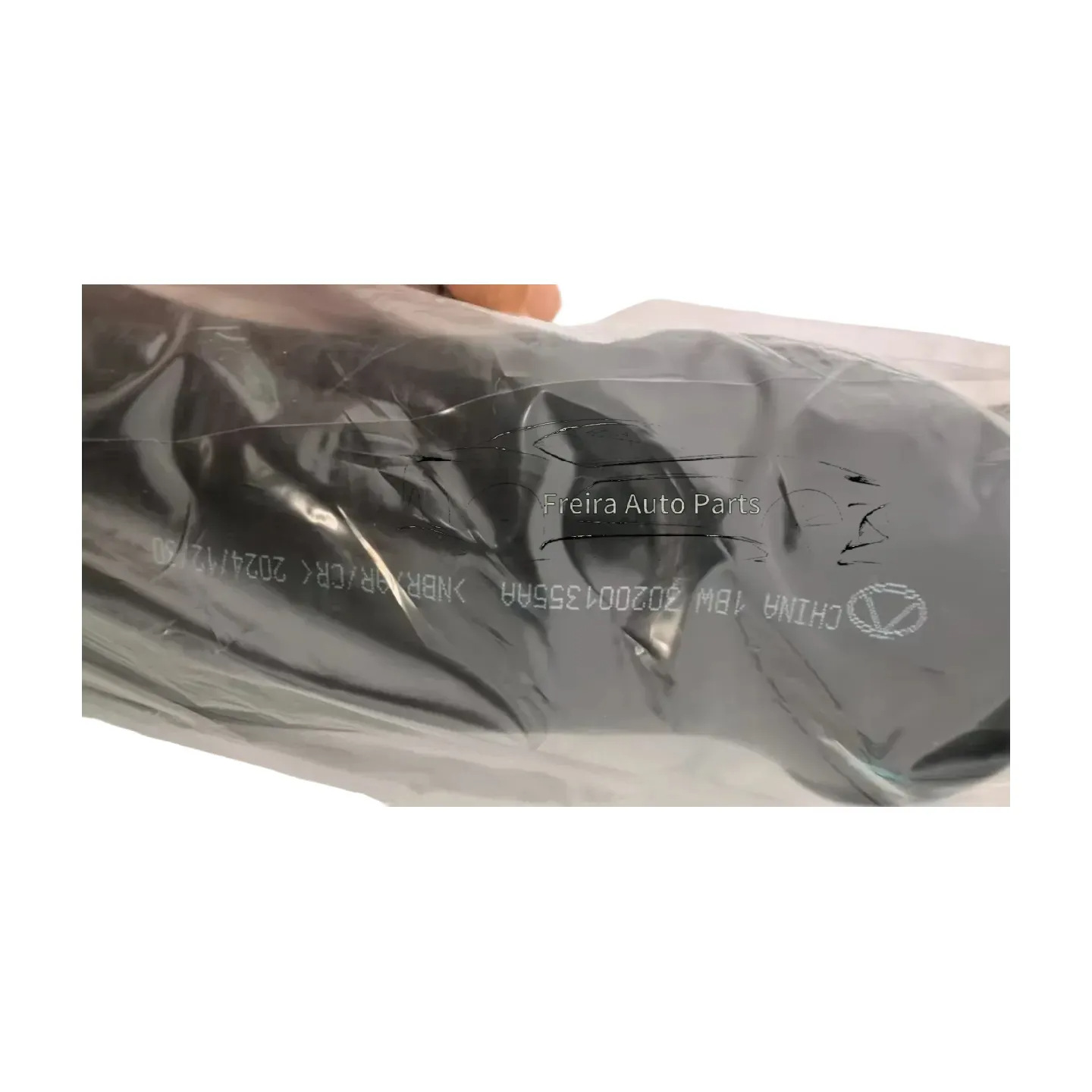
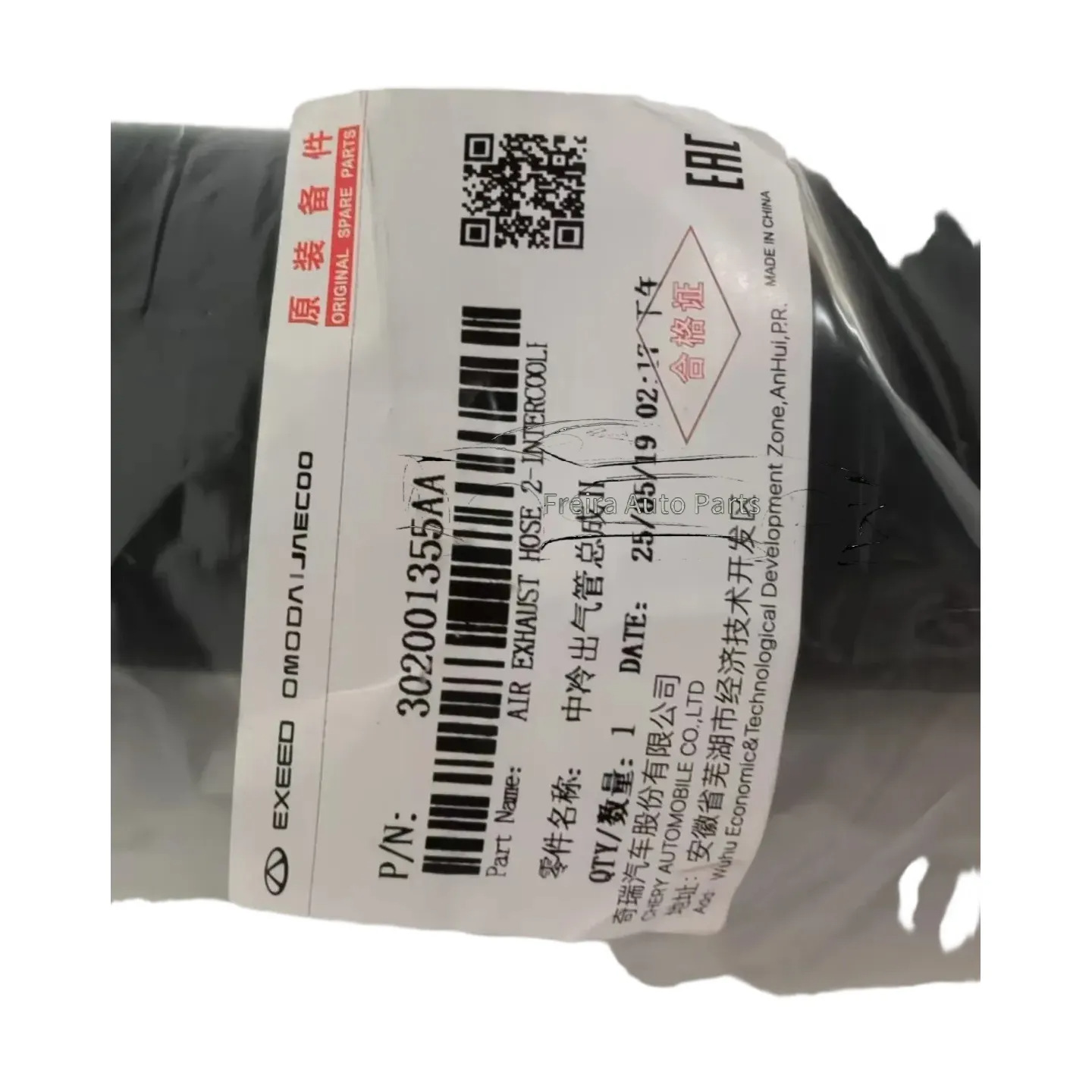
The car intercooler outlet pipe is a critical connecting component in the turbocharged engine intake system, situated between the intercooler and the engine intake manifold. Its core function is to transport cooled, high-density air from the intercooler to the engine combustion chamber.
Turbocharged engines compress intake air, which raises its temperature and reduces its density. The intercooler cools this compressed air, and the outlet pipe ensures the cooled air is delivered efficiently with minimal heat loss and pressure drop. This optimizes the air-fuel ratio, enhances combustion efficiency, boosts engine power output, and reduces fuel consumption and exhaust emissions. The pipe is applicable to gasoline and diesel turbocharged engines, with customized versions for Chery, Jetour, and iCAR series to match their original intake system layouts.
High-Quality Material for Heat Resistance & Durability
The pipe is made of premium materials tailored to withstand high temperatures and pressure:
Reinforced Silicone Version: Adopts high-temperature resistant silicone (able to withstand -40°C to 200°C) with embedded glass fiber layers for enhanced tensile strength and pressure resistance. It is flexible, resistant to oil and aging, and can absorb engine vibration to avoid cracking.
Aluminum Alloy Version: For high-performance models, it uses lightweight aluminum alloy with heat-dissipating properties. The surface is treated with anti-corrosion coating to prevent rust and oxidation, ensuring stable airflow with zero heat absorption.
Both materials meet OE standards, withstanding the extreme conditions of turbocharged engine operation.
Precision Mold Design for Leak-Proof ConnectionEngineered with 1:1 scanning data of the original vehicle’s intercooler and intake manifold interfaces, the pipe has precise diameter and length dimensions. The connection ends are equipped with reinforced clamping grooves and matched with high-tightness hose clamps, ensuring a leak-proof seal. This prevents compressed air from escaping, which would otherwise cause engine power loss, rough idling, or abnormal noise. The pipe’s shape is optimized to avoid sharp bends, minimizing airflow resistance and pressure drop during air delivery.
Shock-Absorbent & Vibration-Resistant StructureSilicone versions of the pipe have excellent elasticity, which can buffer the vibration generated by the engine and turbocharger during operation. This reduces the stress on the intercooler and intake manifold connection points, avoiding cracking or loosening caused by long-term vibration. The pipe is also designed with a certain degree of flexibility to adapt to the slight displacement of engine components during operation, ensuring stable performance without deformation.
Direct Replacement & Easy InstallationThe intercooler outlet pipe is designed as an OE-spec direct replacement part, with no modifications required to the intake system. Installation steps are simple:
Loosen the hose clamps at both ends of the old pipe and disconnect it from the intercooler and intake manifold.
Clean the connection surfaces to remove oil stains and debris.
Install the new pipe, align it with the interfaces, and tighten the hose clamps to the specified torque.
DIY enthusiasts or professional technicians can complete the replacement in 15–20 minutes.
Installation Preparation
Park the vehicle on a flat surface, turn off the engine, and wait for it to cool completely to avoid burns.
Locate the intercooler outlet pipe (usually in the engine bay, connected between the intercooler and the throttle body).
Prepare tools: socket wrench set, screwdriver, and new hose clamps (if replacing old ones).
Installation Steps
Loosen the hose clamps at the two ends of the original pipe, then pull the pipe off the intercooler and intake manifold ports.
Wipe the ports with a clean cloth to remove dust, oil, and residual gasket material.
Fit the new intercooler outlet pipe onto the ports, ensuring it is fully seated.
Secure both ends with hose clamps and tighten them evenly to avoid damaging the pipe or causing air leaks.
Start the engine and check for abnormal noise or air leakage at the connections; adjust the clamp tightness if necessary.
Usage Notes
Replace the pipe immediately if cracks, bulges, or oil stains are found at the connection points (signs of air leakage or material aging).
Use only dedicated hose clamps; avoid over-tightening, which may damage the pipe’s clamping grooves.
For turbocharged engines, check the pipe regularly during maintenance to ensure its integrity, especially for vehicles operating in high-temperature or dusty environments.
This intercooler outlet pipe offers OE-spec customized versions for Chery, Jetour, and iCAR series turbocharged models (including Tiggo 8 Pro, Jetour X90 Plus, iCAR 03 Turbo). Universal versions are also available for mainstream turbocharged passenger cars and SUVs. When purchasing, please confirm the vehicle model, engine type, and production year to ensure a perfect match.