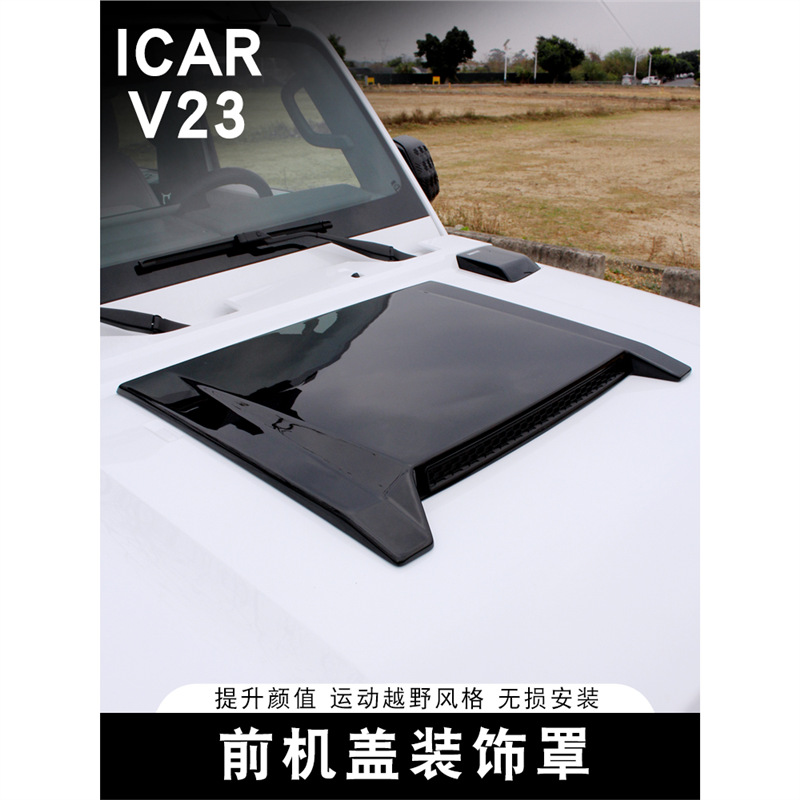
The car front hood, also known as the bonnet, is a large, hinged exterior panel that covers the entire engine bay of a vehicle. Its primary functions are engine bay protection and aesthetic integration:
Protective Barrier: It shields the engine, battery, wiring harnesses, and other core components from external impacts (e.g., small stones, debris), dust, rain, and snow, reducing corrosion and damage risks.
Thermal Insulation & Noise Reduction: The inner surface is usually fitted with a soundproof and heat-insulating cotton pad, which blocks engine noise from spreading to the cabin and prevents high-temperature radiation from affecting the front windshield and cabin environment.
Aesthetic & Aerodynamic Role: As a key part of the vehicle’s front-end design, it maintains the overall styling consistency of the car. Its streamlined shape optimizes airflow over the vehicle, reducing wind resistance during driving.
This component is designed to match specific vehicle models, with customized OE-spec versions available for Chery, Jetour, and iCAR series to fit their unique front-end layouts and hinge positions.
High-Strength Material ConstructionTwo mainstream material options are available to meet different needs:
Steel Hood: Made of high-quality cold-rolled steel plate, it has excellent impact resistance and structural rigidity, providing reliable protection for the engine bay. It is cost-effective and widely used in economy and family cars.
Aluminum Alloy Hood: Adopts lightweight aluminum alloy material, which reduces the vehicle’s front-end weight, optimizes weight distribution, and improves fuel efficiency and handling performance. It is commonly used in mid-to-high-end and sports models.
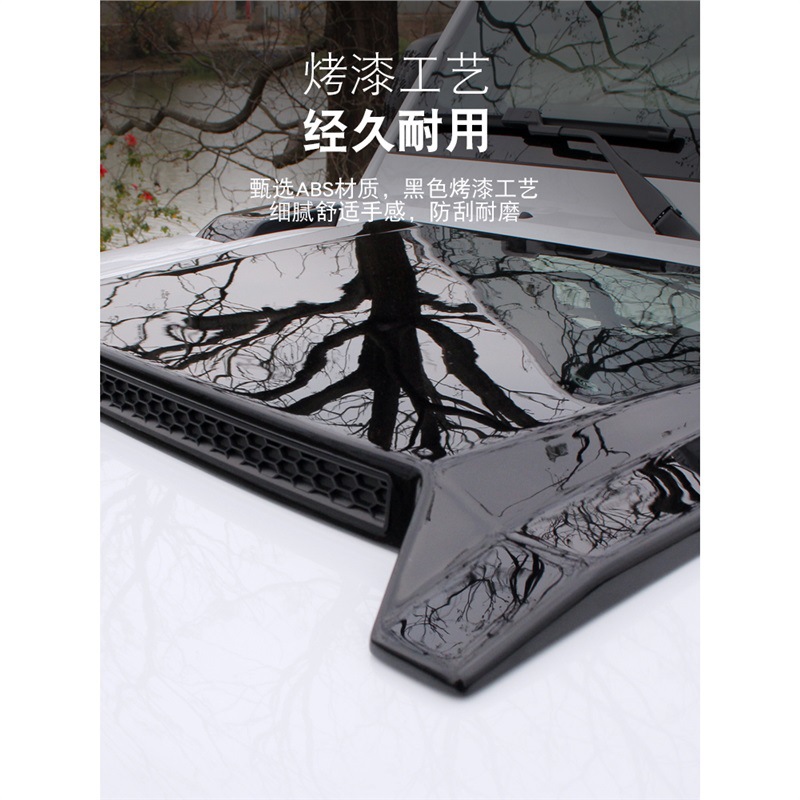
Both materials undergo strict anti-corrosion treatment (electrophoresis, spray painting) to prevent rust and fading, even in harsh weather conditions.
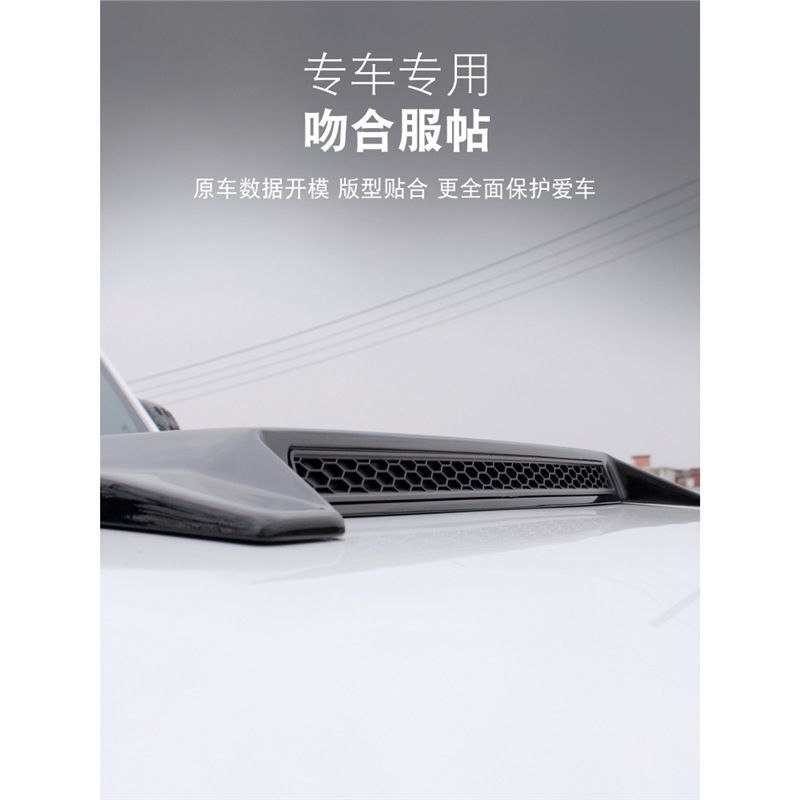
Precision Mold Design for Perfect FitEngineered with 1:1 scanning data of the original vehicle’s front-end structure, the hood matches the front fenders, grille, and front bumper seamlessly. The edge gaps are uniform and consistent with factory standards, avoiding water leakage or wind noise caused by poor fit. The hinge mounting holes are precisely positioned, ensuring smooth opening and closing without jamming or sagging.
Humanized Safety & Structural Design
Safety Latch System: Equipped with a two-stage latch (primary and secondary lock), it ensures the hood stays securely closed during driving and can only be opened from inside the cabin first, preventing accidental opening while on the road.
Reinforced Rib Structure: The inner panel is designed with multiple reinforced ribs, which enhance the hood’s load-bearing capacity and impact resistance without increasing excessive weight.
Heat Dissipation Vents: Some performance-oriented models have integrated air vents on the hood, which help dissipate hot air from the engine bay quickly, improving the heat dissipation efficiency of high-power engines.
OE-Spec Replacement & Easy InstallationThe hood is designed as a direct OE replacement part, with pre-drilled holes for hinges, latches, and decorative components (e.g., hood emblems). Installation only requires matching the hinge mounting points, tightening the fixing bolts, and adjusting the latch position to ensure proper locking. Professional auto body shops can complete the replacement and painting process efficiently, restoring the vehicle’s original appearance.
Installation Preparation
Park the vehicle on a flat surface, turn off the engine, and engage the parking brake.
Prepare tools: socket wrench set, torque wrench, and a support rod (to prop up the hood during installation).
If replacing a damaged hood, remove the old hood by disconnecting the hinges and latch assembly, and transfer reusable parts (emblems, insulation pads) to the new hood.
Installation Steps
Align the new hood’s hinge holes with the vehicle’s hinge brackets, and tighten the bolts slightly (do not fully lock them initially).
Adjust the hood’s position up, down, left, and right to ensure uniform gaps with the front fenders and bumper.
Adjust the latch striker position to ensure the hood locks securely and opens smoothly.
Fully tighten all mounting bolts to the specified torque, and install the insulation pad, emblems, and other accessories.
Usage Notes
Do not place heavy objects on the hood for a long time, as this may cause deformation of the panel.
Clean the hood regularly; avoid using abrasive cleaning agents that may scratch the paint surface.
Check the latch and hinge lubrication status periodically. Apply lubricating oil to the hinges to maintain smooth operation, and ensure the latch is free of debris to prevent failure.
This front hood offers OE-spec customized versions for Chery, Jetour, and iCAR series (including Tiggo, Arrizo, Jetour X70/X90, iCAR 03 models). When purchasing, please confirm the vehicle’s year, model, and original hood material (steel/aluminum alloy) to ensure a perfect match.