
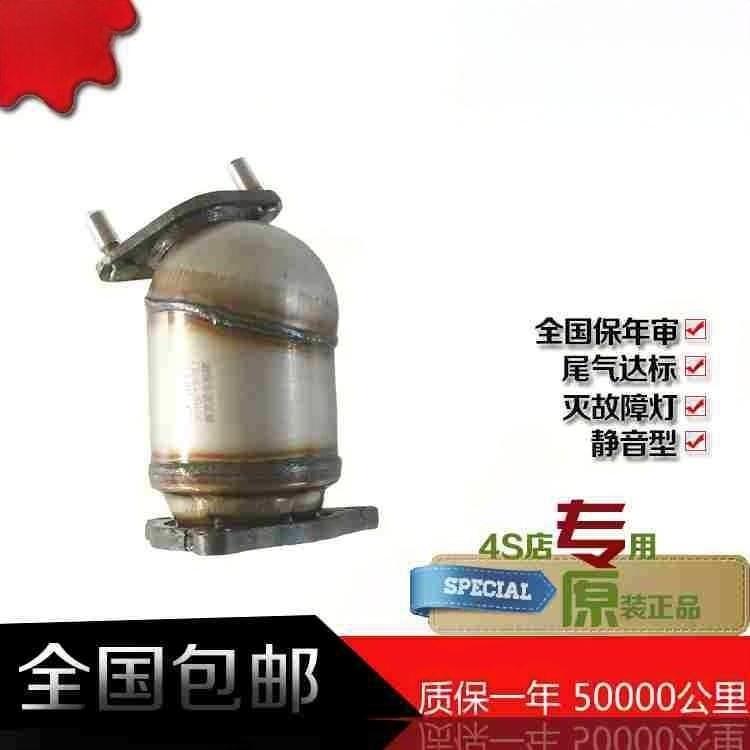
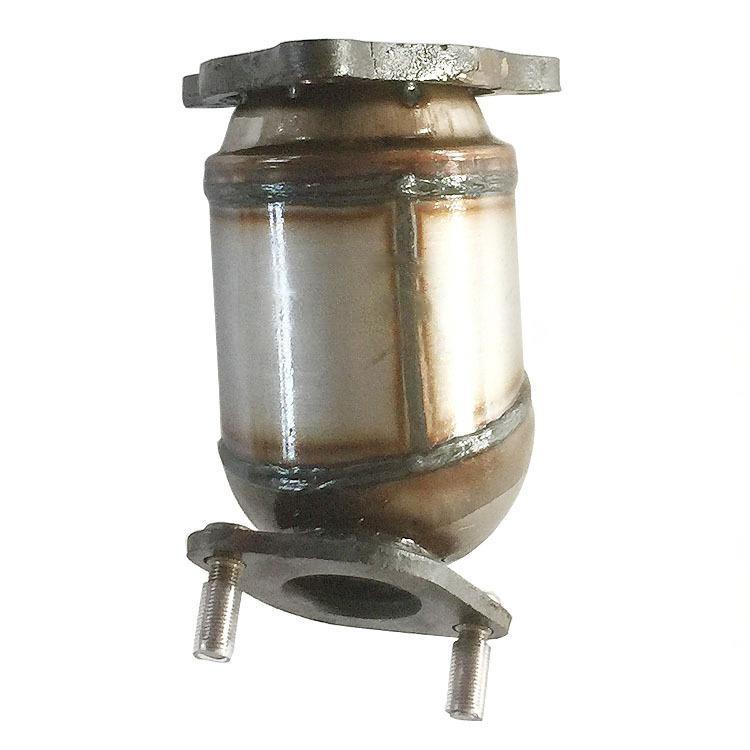
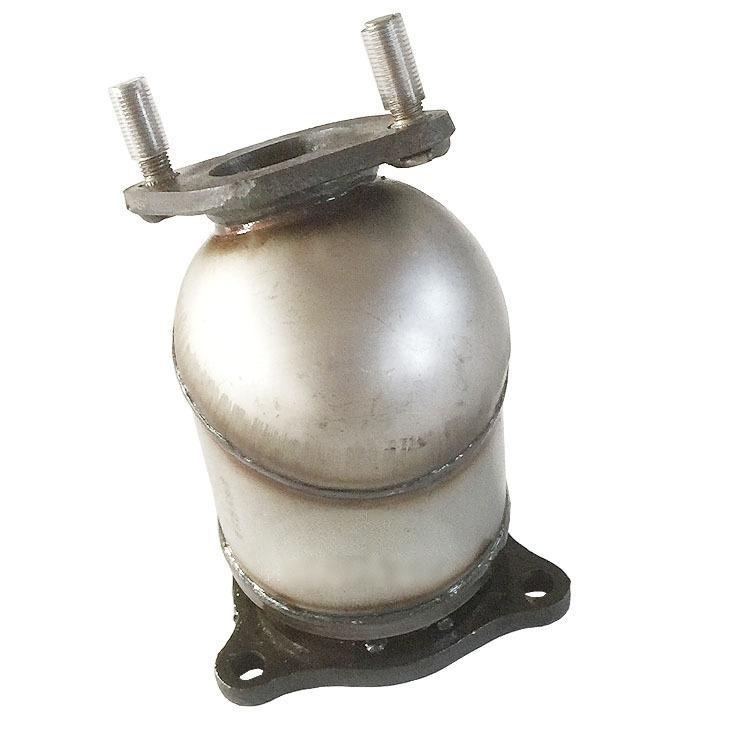

High-Standard Catalytic Converter & Exhaust Pipe Assembly
Core Function & Product Overview
Emission Purification: The built-in honeycomb ceramic carrier coated with precious metals (platinum, palladium, rhodium) can efficiently convert harmful gases in the exhaust (carbon monoxide, hydrocarbons, nitrogen oxides) into harmless carbon dioxide, water vapor, and nitrogen, reducing vehicle exhaust pollution and meeting emission inspection standards.
Exhaust Gas Discharge: The exhaust pipe serves as a smooth channel for exhaust gas to flow out of the engine, with a optimized pipeline design that reduces exhaust back pressure, improves engine exhaust efficiency, and helps maintain the vehicle’s power performance and fuel economy.
Core Features & Advantages
High-Purity Catalyst & Efficient Purification
Premium Ceramic Carrier: Adopts a high-density honeycomb ceramic carrier with a large specific surface area, which maximizes the contact area between exhaust gas and the catalyst, ensuring high purification efficiency (up to 95% for harmful gas conversion).
Precious Metal Coating: The carrier surface is coated with a high-content precious metal catalyst, featuring strong activity and stable performance. It can quickly reach the working temperature (250–300°C) after engine startup, and maintain efficient purification capacity even under long-term high-temperature exhaust conditions.
Emission Standard Compliance: Meets national high-level emission standards, helping the vehicle pass annual emission inspections smoothly without triggering the engine’s emission fault warning light.
Durable Construction & Corrosion Resistance
High-Quality Stainless Steel Shell: The exhaust pipe and catalytic converter shell are made of 409L stainless steel, which has excellent high-temperature resistance and corrosion resistance. It can withstand the high-temperature exhaust gas (up to 800°C) and resist erosion from rainwater, road salt, and exhaust acid, avoiding rust perforation and prolonging service life.
Reinforced Welding Process: All welding joints use argon arc welding technology, with firm and smooth welds that can resist the vibration of the engine and road bumps without cracking or air leakage.
Heat Insulation Design: The outer layer of the catalytic converter is wrapped with a heat insulation cotton layer, which reduces heat radiation to the engine bay and surrounding components, and lowers the surface temperature of the assembly to improve driving safety.
Precision Fit & Direct Replacement Installation
OE-Spec Dimensions: Manufactured according to the original vehicle’s exhaust system data with 1:1 precision, the assembly’s flange interface, bracket position, and pipe diameter are fully consistent with the factory parts, ensuring seamless connection with the exhaust manifold and rear muffler.
Easy Installation Process: Professional installation can be completed in 30–40 minutes with standard tools. No cutting, welding, or modification of the vehicle body is required—just remove the old exhaust component, align the new assembly with the mounting brackets and flange bolts, and tighten the fasteners according to the specified torque.
No ECU Calibration Needed: The assembly matches the original engine’s exhaust back pressure parameters, so it will not affect the engine’s air-fuel ratio or trigger fault codes after installation, ensuring the vehicle runs stably.
Low Noise & Smooth Exhaust Performance
Optimized Pipeline Bending Design: The exhaust pipe adopts a smooth bending process without sharp angles, which reduces exhaust flow resistance and noise, avoiding the harsh exhaust roar caused by poor-quality exhaust components.
Internal Sound-Absorbing Structure: The connecting section between the catalytic converter and the exhaust pipe is equipped with a sound-absorbing cotton filling structure, which further reduces exhaust noise and improves driving comfort.
Installation & Usage Guidelines
- Installation Preparation
Park the vehicle on a flat surface, turn off the engine, and wait for it to cool completely to avoid high-temperature burns.
Prepare tools including a socket wrench set, torque wrench, and gasket replacement parts (exhaust flange gaskets are recommended to be replaced with new ones during installation).
Check the new assembly for damage such as shell deformation or carrier blockage before installation.
- Installation Steps
Raise the vehicle with a jack and secure it with safety stands to ensure stable operation.
Disconnect the old catalytic converter and exhaust pipe assembly from the exhaust manifold and rear muffler by removing the flange bolts and mounting bracket bolts.
Remove the old exhaust component and clean the flange surface of the exhaust manifold and rear muffler to remove rust and carbon deposits.
Install new exhaust flange gaskets, align the new assembly with the flange interfaces and mounting brackets, and install the bolts.
Tighten all bolts to the specified torque (usually 25–30 N·m) in a cross order to ensure uniform force and no air leakage.
Lower the vehicle, start the engine, and check for exhaust leaks at the flange joints and welding seams (listen for abnormal hissing sounds or check with a smoke detector).
- Usage Notes
Do not start the engine immediately after installation for a long time in an enclosed space to avoid carbon monoxide poisoning.
Avoid idling the engine for a long time during the running-in period (first 500 kilometers) to help the catalyst reach its optimal working state quickly.
Regularly check the assembly for rust, cracks, or loose bolts; replace damaged parts in a timely manner to prevent exhaust leakage and emission failure.
Compatibility Statement
Extracted English Content
Product Browser Title
Chery Qiyun 1.5/Fengyun Catalytic Converter & Exhaust Pipe - High-Standard Emission Control AssemblyProduct Detail Keywords
Chery Catalytic Converter, Exhaust Pipe Assembly, High-Standard Emission Part, Qiyun/Fengyun Auto AccessoryProduct Detail Description (59 characters)
High-standard catalytic converter & exhaust pipe—corrosion-resistant, efficient purification, direct replacement for Chery models


Form
PHONE*
*
©2025 Hefei New Exeed Machinery Technology Co., Ltd. All rights reserved